
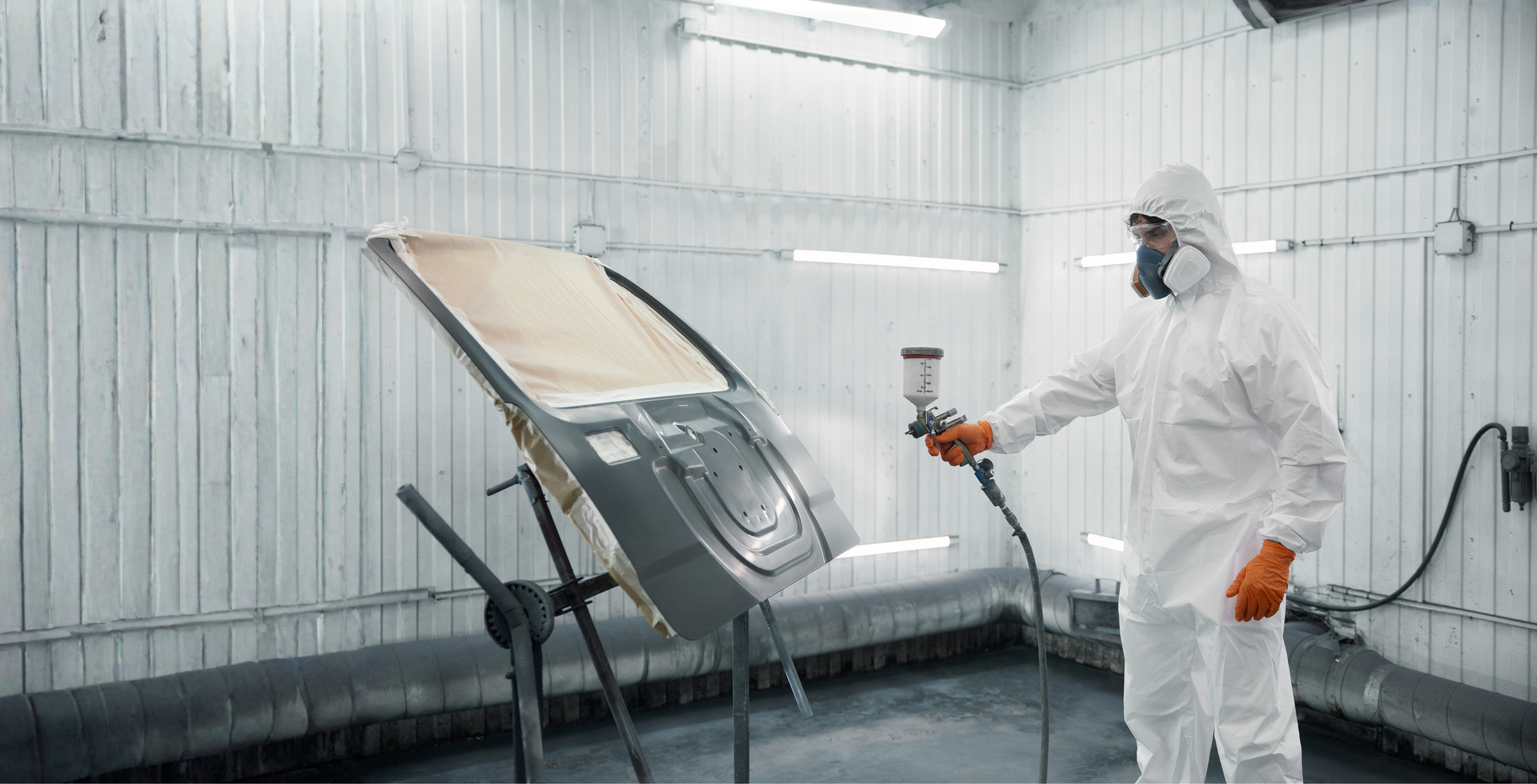
Common Paint Issues: A Professional Troubleshooting Guide
Whether you are using an aerosol or a professional spray gun, even small errors in technique can lead to visible defects. However, knowing what can cause issues and following a systematic approach can be vital to achieving a perfect finish each time.
Toubleshooting the Most Common Paint Issues
-
Uneven Application and Fisheyes
The Cause: Surface contaminants such as dust, silicone, or residual grease disrupt the paint’s surface tension.
The Fix: Meticulous preparation is non-negotiable. Use a dedicated degreaser and tack cloths to ensure the substrate is chemically clean before the first coat.
-
Orange Peel (Textured Finish)
The Cause: This occurs when the paint film doesn't level out, often due to incorrect spray distance, high paint viscosity, or using the wrong nozzle size.
The Fix: Adjust your paint-to-thinner ratio for spray guns or maintain a consistent distance of 20–25cm for aerosols. Proper atomization is the enemy of orange peel.
-
Runs and Sags
The Cause: Applying coats too heavily or failing to allow for "flash-off" time (the period where solvents evaporate).
The Fix: Apply multiple light "mist" coats rather than one heavy layer. Always honour the recommended drying window provided on the product technical data sheet.
-
Dry Spray
The Cause: The paint droplets begin to dry in mid-air before reaching the surface, usually caused by spraying from too far away or working in windy, outdoor conditions.
The Fix: Reduce your spray distance and ensure you are working in a controlled environment with steady, but not excessive, airflow.
-
Brush and Lap Marks
The Cause: This is common when the "wet edge" is lost, often from painting too slowly or using low-quality application tools.
The Fix: Use high-quality synthetic brushes or rollers and work quickly. Overlap your strokes by 50% to maintain a continuous wet film until the section is complete.
The Critical Role of Temperature and Environment
If you are still experience common paint issues despite following the fixes above, the culprit is likely the ambient environment
Expert Tips: Optimal painting conditions are typically between 15°C and 25°C. Extreme heat causes paint to flash too quickly (leading to dry spray), while extreme cold or high humidity prevents proper bonding and curing.

Final Thoughts
Most application errors are reversible with a bit of patience and the right technique. By mastering your environment and your equipment, you can eliminate these frustrations and achieve a factory-quality finish every time.
I’ve designed this for you in two formats: a high-value infographic layout you can use on your blog or social media, and a concise checklist that serves as a perfect lead magnet or "save-for-later" resource.
-
FAQ: How to Fix Paint Defects
What is "flash-off" time and why does it matter?
Flash-off time is the short interval between coats that allows solvents to evaporate. Skipping this step is a leading cause of solvent popping and paint sags.
How do I fix a run once the paint has dried?
Once fully cured, you can carefully sand the "run" flat using a high-grit abrasive (e.g., P1200 or P2000), then polish the area to restore the gloss.
Does the quality of the brush really affect the finish?
Absolutely. Cheap brushes lose bristles and create uneven pressure, which is a primary cause of visible lap marks and poor paint distribution.

