Mipa Paints Limited
Sale priceFrom £2.99

Cart
Your cart is empty
Sort by
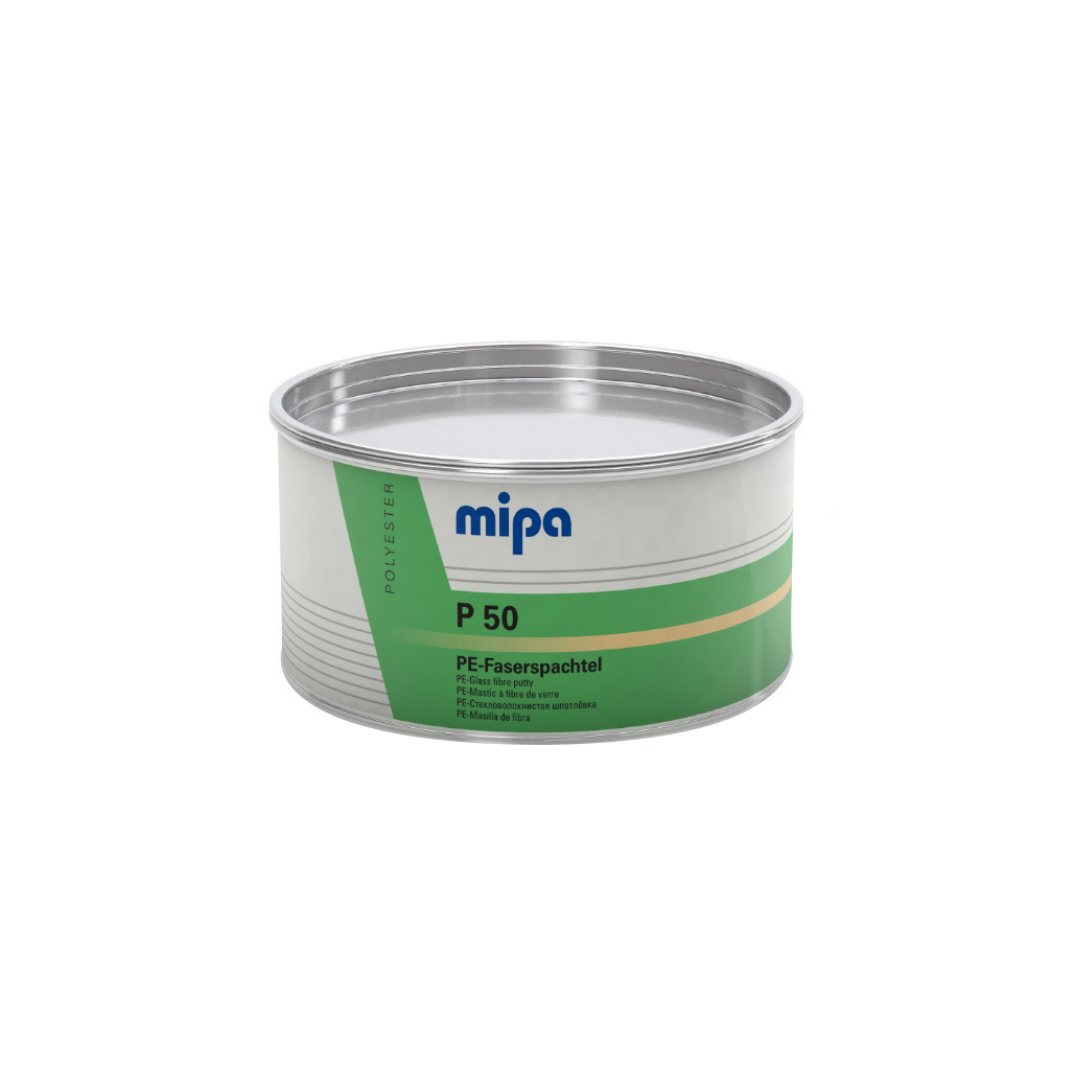
A standard body filler is designed primarily for cosmetic smoothing rather than structural reinforcement. It lacks the tensile strength to bridge gaps or withstand the mechanical stresses a vehicle panel endures. When you have a through hole caused by rust, a regular filler will quickly crack and fall out because it has no base to adhere to. A glass fibre filler solves this by creating a self supporting mesh. The glass strands act as an internal skeleton, allowing you to bridge holes in metal without needing a backing plate. This provides a rock solid foundation that is waterproof and resistant to the vibrations of the road, preventing the corrosion from returning through the repair.
It is true that a fibre reinforced product is significantly harder to sand than a standard finishing putty, but this is a trade off for its superior strength. To achieve a professional finish, you should shape the material while it is in its initial curing stages using a coarse abrasive disc or a rasp. Once the material is fully hard, you can use high quality dry sanding papers to level the surface. Because of its hardness, we recommend applying a thin layer of fine finishing putty or high build primer over the top of the cured fibreglass filler to address any microscopic pinholes or surface texture before you proceed to the painting stage. This two step process ensures a perfectly smooth panel without compromising the structural repair beneath.
Yes, but with careful consideration of the substrate. While these fillers are designed primarily for metal and hard surfaces, their excellent adhesion properties make them effective for structural repairs on rigid plastic components, such as thick bumper sections or large trim panels, where a standard plastic filler might not provide enough rigidity. However, you must ensure the surface is heavily scuffed to provide a strong mechanical key, and for many synthetic surfaces, applying a dedicated adhesion promoter before the filler is highly recommended. Always avoid using these fillers on extremely flexible plastics, as the rigidity of the glass fibres can cause the repair to pop off if the panel flexes significantly under impact. Always perform a test on a small, inconspicuous area if you are unsure of the compatibility.