Skip to content
  • Cart

    Your cart is empty

    Sort by

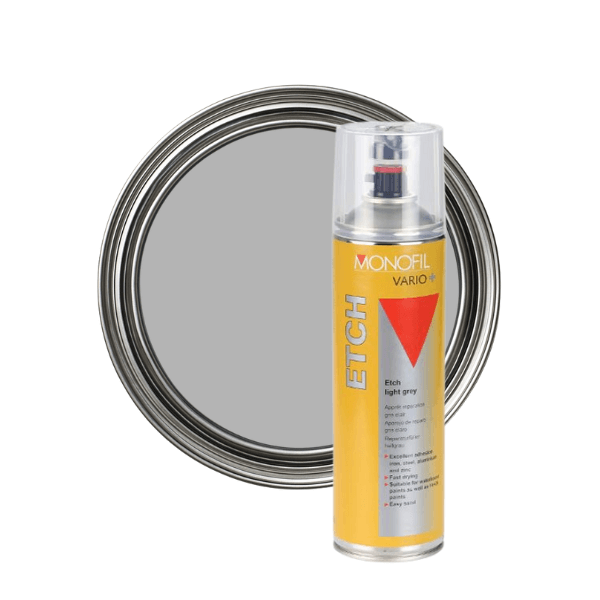
    Spray can labeled 'Moncal Vario Etch' next to a gray paint can on a white background
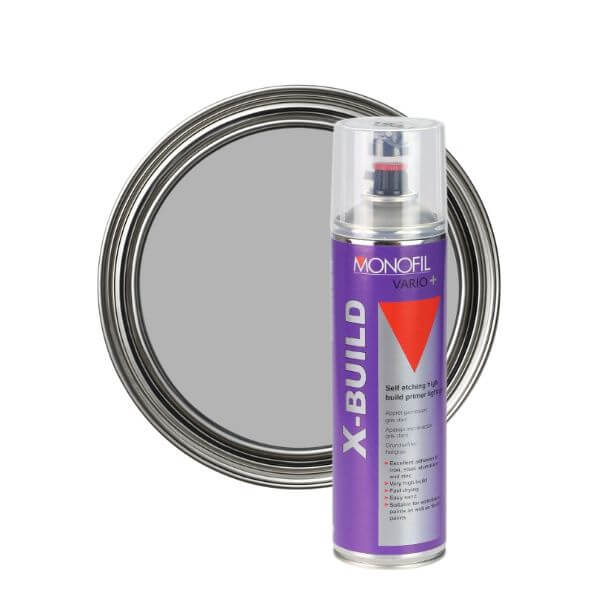
    On saleMonofil Vario+ X Build Light Grey (500ML) filler spray with gray color paint sample.

    Paint Primers Frequently Asked Questions

    What is primer for paint?

    A primer is a special type of preparatory coating that is applied to a surface before the main colour coat of paint. It is not paint, but rather the essential foundation that ensures your final paint job looks professional and lasts for years.

    Think of it as the "glue" of your paint system. It's formulated with a high concentration of binding resins that are designed to do one thing exceptionally well: stick. It creates a powerful bond with the raw substrate (like bare wood, metal, or plaster) and then provides the perfect, uniform surface for your topcoat of paint to adhere to. Without this foundational layer, paint is highly likely to peel, chip, or fail prematurely.

    What does paint primer do?

    Paint primer performs several critical functions that are essential for a high-quality, long-lasting finish. Skipping the primer step is one of the most common causes of paint failure.

    Here are the main jobs a primer does:

    • Ensures Adhesion: This is its most important job. It creates a strong bond between the surface and the paint, preventing peeling and chipping, especially on slick or difficult surfaces.
    • Seals Porous Surfaces: Materials like new plaster, drywall, and bare wood will soak up paint like a sponge. A primer seals these surfaces, preventing the paint from being absorbed unevenly and saving you money by reducing the number of topcoats you need.
    • Blocks Stains and Odours: A good primer will permanently block stains like water marks, nicotine, smoke damage, or wood tannins from bleeding through and ruining your new paint colour.
    • Creates a Uniform Surface: Primer smooths over minor imperfections and provides a consistent, even-coloured base. This ensures your final topcoat has a smooth, uniform sheen without blotchy or dull spots.

    How many coats of primer do I need?

    For most standard applications, one single, well-applied coat of primer is all you need. A single coat is sufficient to provide the adhesion, sealing, and uniform base required for your paint to perform perfectly.

    However, there are a few specific situations where applying two coats of primer is highly recommended for the best possible result:

    • Making a Drastic Colour Change: If you are painting a very light colour over a very dark one (e.g., white over black or navy), a second coat of primer will do a much better job of hiding the old colour, meaning you'll need fewer expensive topcoats.
    • Sealing Very Porous Surfaces: On materials that are extremely absorbent, like new unpainted MDF, new plaster, or very dry old wood, the first coat of primer can soak in significantly. A second coat ensures the surface is completely sealed.
    • Covering Severe Stains: For persistent stains like heavy water damage or severe nicotine staining, a second coat of a dedicated stain-blocking primer may be necessary if you can still see the stain faintly through the first coat.

    Recently viewed